When every drawer is full and every surface seems to collect something, decluttering can feel impossible. But you only need a few realistic rules that fit the space you already have.
This blog focuses on practical resets you can finish in short bursts, using the storage, routines, and boundaries that apartments and homes already offer. The goal is not to own almost nothing. It is to make room for the things you use, love, and can comfortably store.
1. Start with a “one-surface reset”
Do not begin by pulling everything out of every closet. Choose one visible surface—a kitchen counter, coffee table, bathroom shelf, or entryway ledge—and clear only that area. A quick visual win builds momentum without turning your home upside down.
Use three simple destinations:
- Keep: it belongs here and you use it regularly.
- Relocate: it belongs somewhere else in your home.
- Release: recycle, donate, return, or discard it.
Before moving on, give the surface a quick wipe and return only the items that support the space. In a small home, one clear landing zone can make the whole room feel calmer.
2. Declutter by category, not by room
Small homes often hide duplicates in several places: chargers in the bedroom, kitchen, and desk drawer; cleaning products under multiple sinks; or extra mugs spread across cabinets. Sorting by category helps you see the true quantity before you decide what stays.
Pick one manageable category, such as travel cups, cables, towels, or winter accessories. Gather only that category, then keep the best and most useful pieces. A helpful test is: Would I choose this item again if I were buying it today?
Keep the process contained by working in a basket or on one cleared surface. When you finish, put the keepers away immediately and remove donations from the home within the next few days. Decluttering is easier when the “maybe” pile does not become a permanent new category.
3. Give every category a container limit
In a compact home, storage is not just a place to put things—it is a boundary. Choose one container, shelf, drawer, or section for each category, and let that space set the limit. When the container is full, something has to leave before something new comes in.
Use limits that match your actual home rather than an idealized organizing system. This approach prevents “storage creep,” where a category quietly expands into every available corner. It also makes future decisions faster because the boundary is already clear.
4. Make storage earn its footprint
In a small home, bulky storage furniture can create as much clutter as it solves. Before adding a shelf, cart, or organizer, ask whether it will hold items you use often enough to justify the floor space.
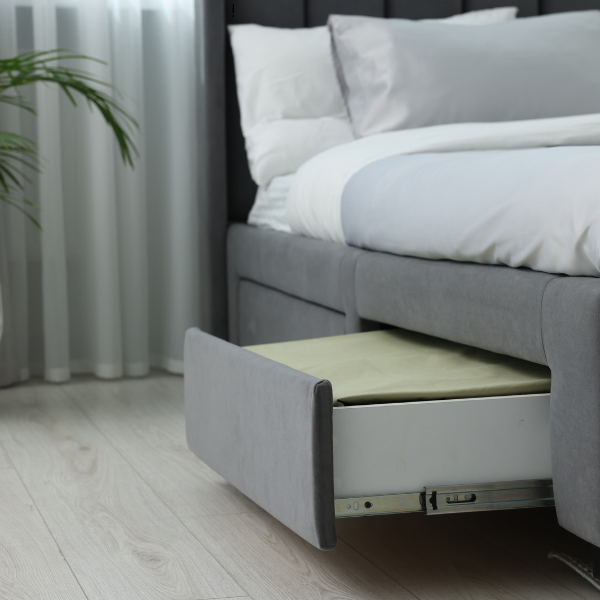
Prioritize storage that does double duty: an ottoman with hidden space, a bed with drawers, a narrow rolling cart, or hooks mounted behind a door. Use vertical space for lightweight items, but keep frequently used belongings between waist and eye level so they remain easy to reach.
Try this before buying an organizer: Measure the exact space, count what needs to fit, and live with a temporary box for one week. If the system is awkward or rarely used, you have saved both money and square footage.
5. Create a “home” for daily drop zones
Clutter often gathers where life happens: keys by the door, mail on the counter, shoes beside the sofa, and bags on a chair. Instead of fighting these habits, design a small landing zone around them.
Place a tray for keys and loose essentials, a hook for your everyday bag, and one small bin for incoming papers. Keep the setup close to the entry point, not in the location that looks most attractive on a floor plan. Convenience is what makes a system stick.
Limit the drop zone to one container per purpose. When the mail bin is full, spend five minutes sorting it. When the shoe area is crowded, return pairs to their designated spot before adding another pair.
6. Use the “one in, one out” rule selectively
The one-in, one-out rule works best for categories that naturally accumulate, such as mugs, jeans, throw pillows, water bottles, and kitchen tools. When a new item comes in, choose one similar item to donate or recycle.
Do not apply the rule rigidly to essentials or replacements. If your only winter coat wears out, you do not need to remove another coat. The purpose is to protect your available space, not create unnecessary guilt.
Make the exchange easy with a small donation bag stored near the front door. Add to it as you notice items that no longer earn their space, then empty it during your next errand.
7. Schedule tiny maintenance resets
Decluttering is not a one-time event, especially when storage is limited. A five-minute reset prevents small piles from becoming overwhelming weekend projects.
Choose one repeatable rhythm:
- Reset the kitchen counter after dinner.
- Clear the entryway before bed.
- Review one drawer every Sunday.
- Remove one donation bag whenever it is full.
Keep the routine tied to something you already do. For example, sort the mail when you make coffee or return misplaced items while waiting for the kettle. The smaller the action, the more likely you are to repeat it.
Make your space easier to live in
The most effective small-space decluttering system is the one you can repeat. Start with one visible surface, set boundaries for crowded categories, and create convenient homes for the things you use every day. You do not need a perfect space—just fewer decisions competing for your attention.
Choose one tip and set a five-minute timer today. When the timer ends, stop or continue only if you still have energy. A clearer home starts with one small, finished action.

Thanks so much for taking the time to read my Blog. If you require more information on buying or selling a home please give me a call. I was born in and am native to Chatham, Ontario. I began my real estate career in 1989, I have been a member of the MLS Chatham-Kent Real Estate Board since 1989. I joined the Royal LePage Sales Team in 2001. I’ve been helping my clients buy and sell homes in the Chatham-Kent area for over 25 years. Give me a call today at (519) 401-5470 for a free, no-obligation consultation.
Thanks, Deb Rhodes
Look me up on “X” @ckhomes4sale